Summary : In this blog, we explore the differences between strength training and cardio for PCOS weight loss, including how each type of exercise affects fat loss, insulin resistance, metabolism, and overall health. You’ll learn the benefits of both workout styles, discover which one may be more effective for managing PCOS symptoms, and find practical gym-based workout tips to help create a sustainable and results-driven fitness routine.
Losing weight with PCOS can feel frustrating because the body does not always respond to diet and exercise in the same way it does for someone without hormonal or metabolic challenges. PCOS is commonly linked with insulin resistance, higher androgen levels, and weight management difficulties, which is why the right kind of exercise matters just as much as the amount of exercise. International guidance also emphasizes that healthy lifestyle habits, including physical activity, are important for women with PCOS even when the scale does not move quickly.
For gym clients with PCOS, the real question is not whether to choose strength training or cardio forever. It is about understanding which one supports fat loss, insulin sensitivity, muscle retention, and consistency in the long run. The best answer is usually a smart mix of both, but strength training often deserves the lead role in a PCOS weight-loss plan.
Why Is Weight Loss More Difficult for Women With PCOS?
Weight loss can be more challenging for women with PCOS because the condition often affects insulin function, hormone balance, and how the body stores fat. Many women with PCOS find that even when they are eating carefully and exercising regularly, the results may come more slowly than expected. This can feel frustrating, but it is usually linked to the way the body responds to insulin and stress.
That is why a smart fitness plan matters so much. Instead of focusing only on aggressive calorie burning, women with PCOS often do better with a balanced approach that supports metabolism, muscle health, and long-term consistency. For a gym audience, this means creating workouts that are effective but also sustainable.
Research on the effects of exercise on hormones in Women with PCOS shows that regular physical activity can help support hormonal balance, improve insulin sensitivity, and contribute to better overall health and well-being.
What Is Strength Training and How Does It Help With PCOS?
Strength training builds and preserves lean muscle. For women with PCOS, that matters because muscle helps the body use glucose more effectively and supports a healthier metabolic rate over time. Research reviews on PCOS exercise show that resistance or strength training may help improve androgen-related outcomes, and the broader guideline picture supports muscle-strengthening work alongside aerobic exercise.
In a gym setting, strength training can include:
- Machine workouts
- Dumbbell training
- Barbell lifts
- Resistance-band work
- Bodyweight training with progression
The biggest advantage of strength training is that it does more than burn calories during the workout. It helps shape the body, protects muscle while dieting, and gives women with PCOS a more sustainable path to fat loss.
Why Strength Training Is Often The Better Long-Term Option
Strength training supports weight loss by helping the body burn energy more efficiently over time. When you build more muscle, your body becomes better at using calories and maintaining a stronger resting metabolism. This can make fat loss more sustainable, especially for women who have struggled with slow progress from other workout styles.
It also helps change the look and feel of the body beyond the scale. Many women with PCOS notice improved strength, better shape, and more confidence when they follow a consistent resistance training routine. That is why strength training is often seen as the foundation of a PCOS gym program.
What Is Cardio Training and Why Is It Important for PCOS?
Cardio is still very important. It improves heart health, increases calorie burn, and supports general fitness. Official physical activity guidance for adults commonly recommends at least 150 minutes of moderate-intensity activity a week, or 75 minutes of vigorous activity, plus muscle-strengthening work on at least two days a week. PCOS-specific exercise guidance follows the same general direction.
For women with PCOS, cardio can include:
- Brisk walking
- Cycling
- Treadmill incline walking
- Rowing
- Elliptical training
- Jogging
- Low-impact classes
Cardio is especially useful for improving conditioning, increasing weekly activity volume, and helping with calorie expenditure. But cardio alone is not always the best long-term answer if the goal is sustainable body composition change.
Why Cardio Still Matters
Cardio helps create a calorie deficit, which is necessary for weight loss. It can also improve stamina, support heart health, and help reduce stress when done at moderate intensity. For many women, regular cardio also makes it easier to stay active throughout the week and build healthy habits.
In PCOS weight loss, cardio works best when it is combined with strength training and proper recovery. Too much cardio alone can sometimes lead to burnout or frustration, especially if the body is not responding as quickly as expected. A smart gym plan uses cardio to complement, not replace, resistance training.
Strength Training vs Cardio for PCOS Weight Loss
The comparison below is a practical gym-based view of both training styles, based on general exercise guidance and the current PCOS exercise evidence.
Factor | Strength Training | Cardio |
Main benefit | Builds lean muscle and supports body recomposition | Improves calorie burn and cardiovascular fitness |
PCOS fit | Strong for long-term metabolic support | Helpful for weekly activity and heart health |
Fat loss style | Slower look on the scale, better shape changes | Faster calorie burn during the session |
Recovery | Needs proper rest and progressive overload | Easier to do more frequently, but can become excessive |
Best use | Core part of a PCOS gym plan | Supportive part of a balanced plan |
The simple takeaway is this: cardio helps you burn, but strength training helps you change. For many women with PCOS, that makes strength training the better foundation for fat loss and body composition. Cardio then works best as the supporting tool.
Which Is Better for PCOS Weight Loss?
If the question is strictly about long-term weight loss results, strength training usually has the edge because it helps preserve muscle and may support better insulin handling and body recomposition. At the same time, aerobic exercise remains important, and the evidence-based recommendation for PCOS is not “pick one.” It is to use a combination of aerobic work and muscle-strengthening work.
That is also why many women do better when they stop chasing extreme cardio sessions and start following a structured gym routine. A balanced plan is more realistic, more sustainable, and usually better for adherence. For many clients, that consistency matters more than any single workout style.
What Is the Best Workout Plan for Women With PCOS?
The most effective gym plan usually combines both training styles in a weekly structure that is easy to repeat. General guidelines for adults, and PCOS exercise recommendations, point toward at least 150 minutes of moderate activity per week plus strength training on two or more days. Some PCOS guidance also suggests more activity may support modest weight loss when appropriate.
A balanced weekly plan can look like this:
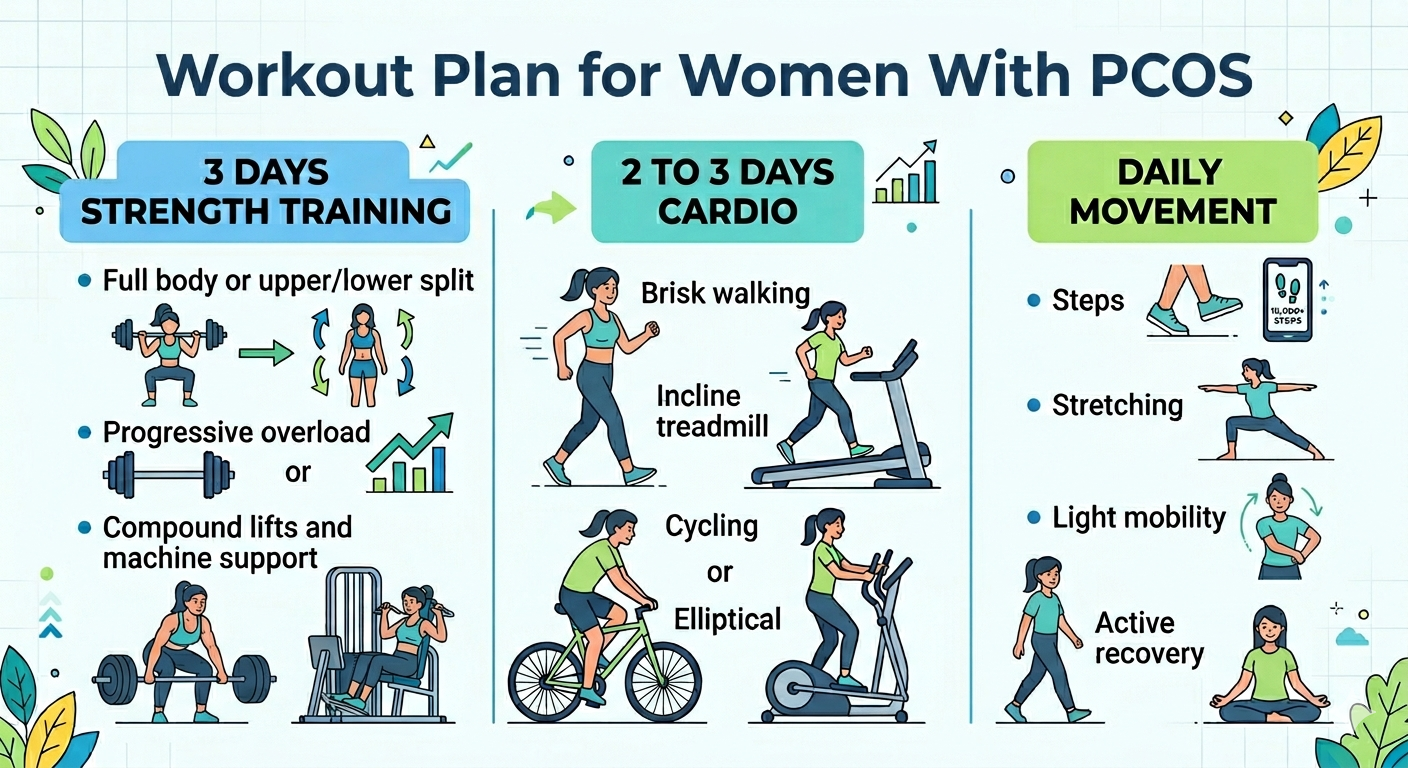
3 Days Strength Training
- Full body or upper/lower split
- Progressive overload
- Compound lifts and machine support
2 to 3 Days Cardio
- Brisk walking, incline treadmill, cycling, or elliptical
Daily Movement
- Steps, stretching, light mobility, active recovery
This structure gives the body enough stimulus to improve strength and fitness without turning exercise into another stress source. That matters for adherence, recovery, and long-term results. According to the levels of physical activity WHO recommends, adults should engage in regular aerobic activity along with muscle-strengthening exercises each week to support overall health, fitness, and weight management.
Common Mistakes Women With PCOS Make in the Gym
Many women are told to “just do more cardio,” but that approach often leads to burnout or slow progress. Another common mistake is avoiding weights because they seem intimidating, even though strength work is one of the most useful tools in a PCOS fat-loss plan.
Other mistakes include:
- Doing too much high-intensity work too soon
- Not eating enough protein to support muscle
- Changing workouts too often
- Tracking only scale weight instead of measurements and strength gains
- Skipping recovery days
- Expecting rapid results from an inconsistent routine
A smarter gym strategy is to progress gradually, recover properly, and track more than one success metric.
What Women With PCOS Should Focus on Instead of Only Weight
Weight is only one part of the picture. PCOS guidelines emphasize overall health, body composition, and quality of life, not just the number on the scale. That means better energy, improved fitness, stronger habits, and a more sustainable routine matter too.
A better set of progress markers is:
- Waist measurement
- Strength improvements
- Better workout stamina
- More consistent energy
- Improved recovery
- Better routine adherence
This is where gym training can be especially valuable. A well-designed program gives structure, progression, and accountability, which are all helpful when PCOS makes results feel slower than expected. Joining a professional strength training gym in PCMC can help women with PCOS follow a structured workout plan, build lean muscle, and achieve their weight-loss goals more effectively.
Your Personalized Path to Better Health and Fitness Starts Here
Ready to Lose Weight With PCOS the Right Way? At Orca Fitness, we understand that PCOS weight loss requires more than just spending hours on a treadmill. The right combination of strength training, cardio, nutrition guidance, and consistent support can make a significant difference in achieving your fitness goals. Our experienced trainers create personalized workout plans designed to help women build strength, improve body composition, and develop healthy habits that deliver long-term results. That’s why many members consider us among the cardio workout & weight loss center in PCMC for achieving sustainable fitness transformations.
Whether you’re just starting your fitness journey or looking to overcome a weight-loss plateau, Orca Fitness is here to support you every step of the way. With modern equipment, expert coaching, and a motivating training environment, we help you train smarter and stay consistent. Contact us today to learn more about our customized fitness programs and discover how our team can help you reach your health, strength, and weight-loss goals with confidence.